Environmental News
Upcoming and Recent Events:
Weekly Guided Nature Tours, Weekend Mornings Throughout the Month – Each month, the Mashpee Conservation Department sponsors guided walking tours, which are free of charge and weather dependent. For directions and information about these walks, click on the “Guided Nature Tours” link along the left-hand margin at the department’s main website, www.mashpeema.gov/conservation. Walks have included Childs River, Lowell Holly Reservation, Mashpee River Woodlands, Pickerel Cove, Santuit Pond Preserve and many more. This is a great way to explore Mashpee’s wonderful array of conservation lands.
Save the Dates (additional details will follow):
Saturday, April 18, 2026, Honor the Earth Fair, Mashpee Wampanoag Tribal Center
Saturday, April 25, 2026, Earth Day Textile Recycling, Composting, and Secure Shredding Event – co-sponsored by Mashpee DPW and MEC, location to be arranged
Check back soon for details!
Information Items:
Proposed New Sewer Phase Map – Mashpee Wastewater Management Project: A map of proposed Sewer Phases was presented to the Mashpee Sewer Commission on December 18, 2025. Sometime within the next few months, a joint meeting with the Mashpee Select Board may be scheduled for discussion and approval of this proposal. A copy of the map is available here. To watch the discussion, click here and start at hour 1, minute 45.
APCC Releases its State of the Waters: Cape Cod 2025 Report: In early December 2025, the Association to Preserve Cape Cod (APCC) released its latest data regarding Cape Cod’s State of the Waters in our estuaries, ponds, and municipal water supplies. Details may be found at: https://capecodwaters.org/.
Cape Cod Freshwater Strategy Report – Ponds and Lakes: The Cape Cod Commission released its final Cape Cod Freshwater Strategy Report this past summer. This guide outlines a data-driven approach to evaluating, protecting, and restoring Cape Cod’s ponds and lakes, and a framework for improving their overall health. Additional information and the report itself may be found here.
Reminders:
MEC’s Chemical-Free Cape Cod Yard Sign Campaign: In April 2025, MEC launched its new “Chemical-Free Cape Cod Yard” sign campaign – aimed at promoting Chemical-Free Yards that are safe for our Children, Pets, Waters – and Nature as a whole. Already, our signs are proudly being displayed in yards across Cape Cod, including Dennis, Falmouth, Mashpee, Pocasset, and Sandwich. For a donation of just $10, Cape Cod residents who care about the environment can show their support by displaying one of our signs in their yard, setting an example for family, friends, and neighbors. Additional information is available here. Thanks to all who are helping to save our environment – one yard at a time!
Cape-Wide “Perpetual” Conservation Calendar: The Compact of Cape Cod Conservation Trusts and its nonprofit members currently maintain a Regional Calendar of Events, that is updated on a continual basis. This Conservation Calendar includes programs from villages and towns across Cape Cod, encouraging both visitors and residents to take part in nature and environmental events. The wide list of current programs may be accessed at: www.blt.org/capeconservationcalendar.
Textile Recycling is Now the Law! As of November 2022, in Massachusetts it is now illegal to discard any clothing or other textile items in the trash, even if stained, ripped, threadbare, or filled with holes. The full list of items that must now be recycled may be accessed at the link provided, courtesy of Bay State Textiles. MEC is currently holding textile drives twice each year — in April as an Earth Day event, and in August alongside the Hazardous Waste Dropoff. Exact dates and times each year will be posted above under “Upcoming Events”. More information may be found at: List of Clothing and Textiles that must now be Recycled.
Like Ospreys? Thanks to the Friends of the Mashpee National Wildlife Refuge and Comcast, you can now watch – and listen to – the osprey nest of Rachel and Carson and their two new babies located at the Waquoit Bay National Estuarine Research Reserve. To access this live feed, click on the link below, then “Osprey Cam” at: https://www.friendsofmashpeenationalwildliferefuge.org/
Important Fertilizer Reminder: Mashpee regulates the application of fertilizer as follows:
1. No application of nitrogen is permitted between October 30 and April 14 — or at any time within 100′ of specified waterways
2. No application of phosphorus is permitted between December 1 and March 1 — or at any time within 20′ of specified waterways
Even during acceptable dates, no application is permitted before or during a heavy rainfall or when the ground is saturated. These regulations are detailed in the Nitrogen Control Bylaw, amended 2017, available at www.mashpeema.gov, under Town Clerk. However, please note that Mashpee Town Manager, Rodney C. Collins, issued a Special Water Quality Alert to all property owners asking them to discontinue the use of fertilizers on lawns and landscaped areas. This alert is available at https://www.mashpeema.gov/home/news/special-water-quality-alert-july-2021. Thank you for helping to keep Mashpee’s waterways clean!
In Case You Missed It:
Source to Sea Restoration Projects – The Town of Mashpee is currently working with the Association to Preserve Cape Cod (APCC), Waquoit Bay National Estuarine Research Reserve (WBNERR), and the Mashpee Wampanoag Tribe on the restoration of the Mashpee River, Quashnet River, and Red Brook. This project is funded in part by a grant from NOAA. Community Partners for all three projects are still being sought. For additional information about these projects and/or to become a community partner, go to: https://waquoitbayreserve.org/coastal-training-programs/source-to-sea.
Session Videos and Resources from the 2024 Cape Cod Coastal Conference – The June 18, 2024, full-day WBNERR conference entitled “Collaborating for Solutions: Practical Sessions to Achieve Watershed Plans” focused on ways that our Cape Cod communities can take action to restore water quality, reduce nutrients in our watersheds, and apply for funds to assist in implementing Watershed Plans. The full Conference Agenda, Session Videos, and a link to Grant Opportunities and Deadlines are available at: https://waquoitbayreserve.org/2024-cape-coastal-conference/.
Pond Oxygenation Workshop – A Special “Shout Out” to the Waquoit Bay Reserve for their informative, full-day workshop in November 2023 on how to manage healthy ponds by using oxygenation – and no chemicals. This technique has proven successful in lakes and ponds across the US, as well as right here on Cape Cod with Sarah’s Pond in Orleans – thanks to an initiative undertaken by the Orleans Pond Coalition. The full-day program, including agenda, presenter information, and PowerPoints may be found at the link below. For anyone interested in learning more about a fully natural way to help manage our freshwater ponds, this approach is well worth exploring: https://waquoitbayreserve.org/pond-oxygenation-workshop-learning-through-case-studies/
Monthly Board of Directors Meeting Schedule
Board meetings of the Mashpee Environmental Coalition (MEC) are held via Zoom the second Thursday of each month (January to November) starting at 4:00pm unless otherwise noted. There is no meeting in December. Please note that our Annual Meeting takes place the second Thursday in September at 4:00pm followed by the September board meeting.
All are welcome to attend. If you wish to attend one of our meetings, please contact [email protected] by 12:00 noon the day before the meeting so the Zoom link can be emailed to you.
Snapshot Data 2000-2013
In 2003 the Mashpee Environmental Coalition introduced the “Pond Health Program” with volunteer water samplers measuring and recording water column parameters in each of Mashpee’s six major ponds with public access. Collected data was made available to the scientific and local communities. Below are data collected between 2000 and 2013.
Mashpee’s Department of Natural Resources has since taken over the collection of water samples from Mashpee’s waterways.
Right-of-Way Herbicides
While our County Agencies talk to establishing individual town negotiations with transmission line owners on this threat to our potable water supply, they are fostering a divide and conquer approach threatening progress on this important health threat.
Visit for additional information.
The statement below is NStar’s March 2011,not very encouraging, position
NSTAR is the largest Massachusetts-based electric and gas utility with almost a million and a half customers in Eastern and Central Massachusetts . It has released this statement about suspending the use of herbicides for much of this year.
NStar is extending its voluntary moratorium on herbicide use through 2011, demonstrating once again the company’s commitment to working cooperatively with the Cape Cod Commission and other local officials. This latest extension will allow sufficient time for the completion of a comprehensive study to quantify and ultimately reduce herbicide and pesticide use by all users on Cape Cod.
In addition to improved mapping of private wells in 2010, progress has also been made in identifying the primary sources of herbicide and pesticide use on Cape Cod. Results to date confirm NSTAR’s IVM program represents a very small portion of the total Cape-wide herbicide use, though there’s more work to be done in documenting and sharing all of the facts. Therefore, NSTAR supports the commissioning of a comprehensive year-long study that further investigates the sources and effects of herbicide and pesticide use on the Cape and establishes guidelines toward its reduction. To lessen the appearance of undue influence on the study, NSTAR will not provide funding and will have only limited involvement in it.
With this latest extension of its voluntary herbicide moratorium comes the need for NSTAR to resume clear-cut mowing on Cape Cod rights-of-way in 2011. Federal regulations require utilities to demonstrate their compliance with strict standards set forth after the Northeast blackout of 2003. Though integrated vegetation management programs are recognized nationwide as the best practice for right-of-way maintenance to meet ecological and reliability standards, clear-cut mowing will be NSTAR’s only viable option on Cape Cod this year. Work is underway to finalize the company’s plans to resume mowing and details will be shared with the affected towns as soon as they are available.
Storm Water
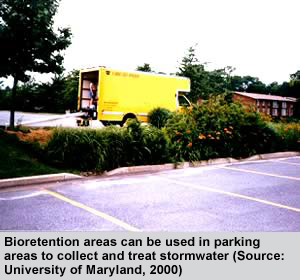 Storm water, from its inception as rain or snow and via its travel as runoff across our lawns, roads and parking lots, adds to itself many forms of unwanted constituents from diverse sources. As it falls from the sky it adds an airborne contaminants to its makeup and then proceeds to include a variety of substances related to human activities.
Lawn fertilizer over-spills onto roads and driveways, the byproducts of automotive utilization such as exhaust, fluid leakage and brake pad wear combined with animal waste products plus many other items, when transported by storm water runoff, create a source of damage to our ground and surface waters that is a substantial threat. The impacts from this pollution source can be mitigated to varying degrees by the application of devices commonly identified as storm water best management practices. These devices are typically selected based upon site-specific conditions and available space.
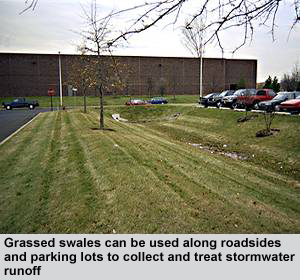 The typical storm drains found in area roadways and parking lots do nothing to reduce contamination levels and, in fact, are worse than allowing storm flow to discharge across a vegetative surfaces. Many storm water best management practices (BMP’s) rely upon root systems and microbes for contamination controls. In Mashpee several scientific studies have established links between storm water runoff and pollution of both fresh and estuarine surface waters.
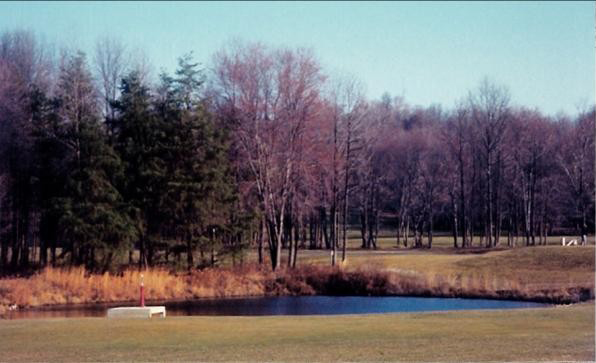 Typical BMP’S include wet or dry detention ponds and stone or vegetated swales. With the acceptance of “Low Impact Development” (LID) techniques, the catalog of devices has added, among others, surface sand filters, tree filters and constructed gravel wetlands. Recent evaluations by the University of New Hampshire have highly rated the constructed gravel wetland.